7 Best Refractory Castable Mixer Machines for Sale
Choosing a Refractory Castable Mixer Machine is not just a matter of comparing prices. The mixer must handle the castable’s ingredients evenly, from fine powders to coarse aggregates, without leaving dry pockets around the pan or blades. A poor match can slow production and create batches that vary in workability. That matters when crews need consistent material for furnace linings, kilns, or repair work. Details count.
This guide to seven machines for sale considers practical factors buyers can verify: mixing capacity, drive configuration, discharge method, construction, and access for cleaning. A compact site mixer may suit smaller repair jobs, while a larger forced-action model may better fit regular production. Yet bigger is not always better. Batch size, available power, material formulation, and daily output all affect the decision. Ask suppliers for specifications and, where possible, a demonstration using a comparable mix. Check how the machine handles abrasive material and whether operators can inspect wear parts without awkward disassembly. No single model fits every plant; even a well-built machine can disappoint when capacity is poorly matched. This comparison offers a starting point, not a substitute for checking your own process, layout, and maintenance needs. One detail is easy to overlook: cleaning time between batches can shape the real cost of ownership.
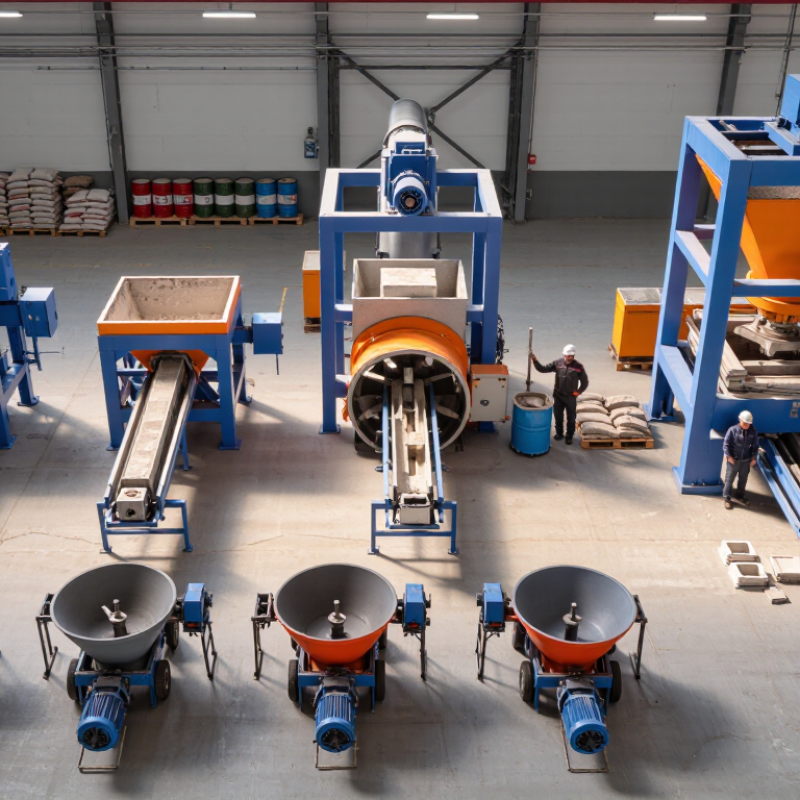
Refractory Castable Mixers: Materials, Mixing Principles, and ASTM C860
Refractory castable combines graded aggregates, fine powders, cement or other binders, and controlled water. The proportions shape flow, setting, strength, and resistance to heat. In a mixer, dry ingredients need even distribution before water enters; adding it too quickly can leave dry pockets or create sticky clumps. Mixer choice matters. A pan or intensive mixer can help disperse fines, while batch size, blade clearance, and mixing time affect consistency. Watch the material, not just the timer. A uniform grey mix can still conceal uneven moisture.
ASTM C860 provides a ball-in-hand method for assessing castable consistency. It is a practical field check, not a substitute for mix design or performance testing. Operators should use the specified water range and record each batch’s water addition, mixing time, and test result. Small differences matter. The World Steel Association’s World Steel in Figures 2024 reports 1,892.2 million tonnes of global crude steel production in 2023, a reminder of the scale of industries relying on refractory linings. That figure does not predict mixer demand, but it puts consistent castable preparation in context. Even careful procedures have limits: ambient temperature and aggregate moisture can shift results, and crews sometimes overlook both.
7 Mixer Types: Pan, Planetary, Intensive, Twin-Shaft, Vertical, Countercurrent, Lab
7 Best Refractory Castable Mixer Machines for Sale
Pan mixers suit routine batches of castable with varied aggregate sizes. Their open mixing area makes charging and inspection straightforward.
Planetary mixers use moving tools to reach more of the bowl, which can help disperse fine powders. Intensive mixers apply stronger mixing action and may help break up stubborn agglomerates. But extra intensity is not always better; check that it does not damage lightweight ingredients.
Twin-shaft mixers are often considered for larger production runs and consistent material movement. Vertical mixers can fit compact work areas, though access and cleaning deserve close attention.
Countercurrent mixers combine different movement patterns to promote mixing; performance depends on the exact design and recipe. Lab mixers handle small trial batches. They are useful for comparing formulations, but their results may not fully predict production-scale behavior.
No perfect choice exists. I would verify it with a real batch.
Tips: Ask for a trial using your actual dry blend, then record mixing time, water addition, discharge residue, and batch consistency. Check cleanout access, wear-part replacement, and capacity at your normal fill level—not just the maximum rating.
Typical Specifications: 100–2,000 kg Batches and 5–15 Minute Mixing Cycles
When comparing seven Refractory Castable Mixer machines, start with batch size and the space available for loading and discharge. Typical working batches range from 100 to 2,000 kg, but a machine’s stated capacity may refer to its maximum load, not the ideal everyday batch. Check the recommended fill level. A 100 kg batch can suit small repair jobs, while larger production lines may need batches near 2,000 kg. Real output also depends on loading time and material flow.
A 5–15 minute mixing cycle is a useful guide, not a guarantee. Dry powders may need time to blend before water or other liquid is added. Dense aggregates, fibers, and uneven moisture can extend mixing. Watch for pale streaks or dry pockets along the vessel wall; these can signal uneven distribution. Shorter is not always better. Ask whether the quoted cycle includes loading and discharge, since those steps affect hourly production.
Compare machines using the same recipe and target batch weight whenever possible. Check whether the mixer can handle your aggregate size, and inspect the mixing arms, liners, and discharge gate for practical access. A small trial batch can reveal sticking or residue that a specification sheet misses. Even a clear test has limits: changing raw-material moisture may alter mixing time, so leave some operating margin.
Quality Checks: ASTM C860 Consistency Testing and ASTM C862 Specimen Preparation
For refractory castable mixer machines, consistent batches begin with controlled water addition and a clean mixing pan. ASTM C860 provides a ball-in-hand method for assessing castable consistency. Take a representative sample and form it by hand, following the standard’s procedure. The material should show the response described by the test, not merely look wet or workable. Too much water can weaken a castable; too little may leave dry pockets. Small details matter. Record water quantity, mixing time, batch size, and test observations for each trial. Keep the mixer and tools free of hardened residue, which can alter later results.
ASTM C862 covers preparing cast specimens for testing. Use the specified mold dimensions and preparation steps for the test being performed. Fill and consolidate the material consistently, while avoiding trapped air and uneven compaction. Label each specimen with its batch and preparation details before curing or conditioning it as required. A good mixer helps distribute dry components and liquid evenly, but it cannot correct poor sampling or careless specimen handling. Check the current standard edition and the applicable test method before setting procedures; requirements can vary by specimen type. In practice, one missed note or an inconsistent water measure can make a comparison less reliable. That is easy to overlook.
Buyer Criteria: Motor Power, Output per Shift, Dust Control, and Wear-Part Life
When comparing refractory castable mixer machines for sale, start with the batch your crew actually handles. Motor power matters, but a higher rating alone does not guarantee a more uniform mix. Check torque under a full load, especially when dense aggregate settles near the bottom. Ask for a trial using your dry blend and water range. Small detail. Big difference.
Estimate output per shift from complete cycles, not the mixer’s advertised hourly capacity. Include loading, mixing, discharge, cleanup, and short stoppages. A machine that handles several steady batches may outperform a larger unit that needs frequent clearing. There is no perfect figure here; crews often underestimate changeover time. Track actual batch weights and cycle times during a normal shift before choosing capacity.
Dust control deserves a close look at charging points, covers, and extraction connections. Fine powder can escape when bags are emptied quickly, so inspect the operator’s work area during a practical demonstration. For wear-part life, ask how liners and mixing blades are checked, adjusted, and replaced. Look for accessible inspection points and clear replacement intervals. Those intervals can vary with aggregate hardness, so treat them as estimates, not promises. A short trial may not reveal long-term wear, but it can expose awkward access or uneven discharge.