
2026 Best Wafer Screws for Global Buyers?
Choosing Wafer Screws for global projects is not just a price comparison. Head profile, thread design, material, coating, and drive type all affect fit and service life. A low-profile head can sit neatly against sheet metal. The wrong thread may loosen under vibration or damage a thin panel. Small details matter.
This guide examines practical options for buyers comparing Wafer Screws across suppliers and markets. It considers common materials, protective finishes, dimensions, and drive styles, while explaining how each choice relates to the application. For outdoor equipment, buyers may need to compare corrosion resistance and coating specifications. For thin panels, thread engagement and installation torque deserve close attention. Not always obvious. Product names alone may not reveal these differences.
Reliable purchasing also depends on documentation. Check dimensional drawings, material descriptions, sample availability, packaging details, and inspection records before approving a large order. Where relevant, confirm that supplier claims match the project’s technical requirements and destination-market specifications. Ask about tolerances and production consistency, too. A sample can fit well, yet a later batch may vary. That matters. No single screw suits every assembly, and a lower unit price may bring trade-offs in finish, consistency, or lead time. Catalog information can leave gaps; asking precise questions is sensible, if not always convenient. The sections ahead offer a grounded framework for comparing products and suppliers, so global buyers can make decisions based on fit, evidence, and intended service conditions.
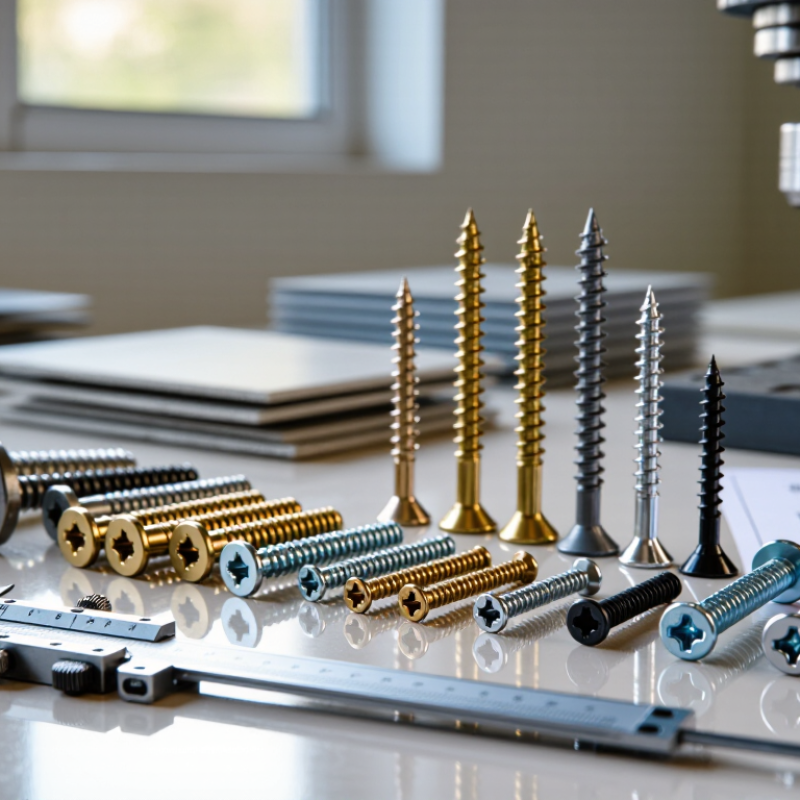
What Wafer Screws Are and How Their Design Works
A wafer screw has a wide, low-profile head that sits close to the surface after installation. The larger head spreads bearing pressure across more material than a narrow pan head, which can help when a clean, low-clearance finish matters. Its underside is usually flat, while the top is broad and shallow. The drive recess transfers turning force from a matching tool to the threaded shank. Small detail matters.
The head shape does not determine the whole joint. Thread diameter, pitch, length, material, and substrate all affect grip and resistance to loosening. A screw driven into thin sheet metal, for example, needs enough thread engagement without breaking through or distorting the panel. In practice, the fit can feel less forgiving than a drawing suggests. Check the actual head diameter and height against nearby parts, not just the nominal screw size.
For global purchasing, request dimensional drawings and confirm tolerances, finish, and test information with the supplier. Corrosion resistance depends on both the screw material and its coating, as well as the conditions where it will be used. Avoid assuming that a broad head replaces a washer or compensates for an oversized hole. It may not. Prototype the joint, inspect the surface for dents, and verify the required tightening method before approving production.
2026 Best Wafer Screws for Global Buyers? - What Wafer Screws Are and How Their Design Works
| Screw Type | How the Design Works | Typical Substrate or Use | Material and Finish Considerations | Buyer Checks |
|---|---|---|---|---|
| Self-drilling wafer-head screw | A drill-shaped point makes a pilot hole and forms the screw path in suitable thin materials; the low-profile, broad head distributes bearing pressure over a wider area than a narrow head. | Sheet-metal assemblies and other applications where the screw point is designed to drill through the specified material thickness. | Commonly supplied in hardened carbon steel with a protective coating. Stainless options may be available, but point design and drilling capability must be checked for the target material. | Confirm the approved drilling thickness, screw length, thread type, head diameter, drive, and coating requirements. Do not assume every drill point is suitable for every sheet thickness. |
| Self-tapping wafer-head screw | A sharp or forming/cutting point engages a prepared hole or a suitable thin substrate. The screw creates or cuts its mating thread as it is driven; it does not use a drill point in the same way as a self-drilling screw. | Thin sheet, plastic, or other materials where the application and screw design allow thread formation or cutting. | Carbon steel and stainless steel are common material choices. Select the material and finish for the operating environment and substrate compatibility. | Check whether a pilot hole is required, along with pilot-hole size, material thickness, thread engagement, and the risk of stripping or cracking the substrate. |
| Machine-thread wafer-head screw | Uses a uniform machine thread and a low-profile bearing head. It normally fastens into a tapped hole or is used with a compatible nut rather than cutting its own thread into sheet metal. | Metal assemblies, enclosures, brackets, and components with a matching tapped hole or nut. | Available in materials and finishes suited to the assembly. Match the screw material and finish to the mating hardware to limit corrosion concerns. | Verify thread diameter and pitch, length, head dimensions, drive, and the matching nut or tapped-hole specification. |
| Stainless-steel wafer-head screw | The wafer-head shape provides a low-profile bearing surface; the point and thread determine whether the screw is self-tapping, self-drilling, or machine-threaded. | Assemblies exposed to moisture or environments where corrosion resistance is important, subject to the limits of the selected stainless grade. | Stainless steel can improve corrosion resistance, but grade selection depends on the environment. Stainless fasteners can gall during installation, so compatible installation practices may be needed. | Specify the stainless grade, point style, required strength, mating materials, and exposure conditions. Do not assume stainless steel is suitable for every corrosive environment. |
| Coated carbon-steel wafer-head screw | Uses the same head and point principles as other wafer screws; the coating provides a surface layer intended to help protect the steel in specified conditions. | General fastening where the screw’s strength, coating, and application requirements are compatible. | Coating performance varies by coating type, thickness, and test conditions. Coatings can be damaged during installation or use. | Request the coating specification and applicable corrosion-test data. Check compatibility with the substrate and avoid relying on a generic “corrosion-resistant” description alone. |
| Wafer-head screw for electronics or light assemblies | A low-profile head can provide clearance benefits in compact assemblies. Drive and thread style depend on whether the design uses a tapped hole, nut, or suitable self-tapping connection. | Light brackets, panels, and compact assemblies where head height or available clearance matters. | Material and finish should be selected for the enclosure environment, electrical design, and mating materials. | Check head height and diameter against the drawing, as well as drive access, thread engagement, installation torque, and clearance requirements. |
Design note: “Wafer head” describes a low-profile head shape; it does not by itself define the screw’s point, thread, material, or performance. Head dimensions, drive details, available sizes, and drilling limits vary by design. Confirm them against the supplier’s technical drawing and the requirements of the application before ordering.