
How to Choose a Flexible LED Work Light?
Choosing a Flexible Led Work Light is not just about brightness. It is about directing dependable light into awkward spaces without fighting the tool. Picture a mechanic reaching beneath a dashboard, or a technician inspecting a dim utility cabinet. A rotating head, a stable base, and a long enough cable can make those tasks easier. Yet a bright beam can still create harsh glare on polished metal. More lumens do not automatically mean better visibility.
For this guide, lighting specialist Alex Morgan offers a practical rule: “Choose a light that stays where the work takes you, not one that makes you work around it.” Treat that as a selection principle, not a substitute for checking product specifications. Compare beam adjustment, mounting options, battery runtime or cord length, and the light’s stated durability. Think about where dust, occasional knocks, or cramped storage may be part of your routine. A flexible neck can help aim light precisely, but it may not hold its position equally well across every model. That detail deserves a hands-on check.
This guide will help you weigh those trade-offs before buying. Consider the work surface, the available power source, and how long the light must run between breaks. Also examine the switch, handle, and mounting points; small design choices matter when your hands are busy. There is no perfect work light for every job. The best choice is the one that fits your tasks, holds steady, and makes important details easier to see.
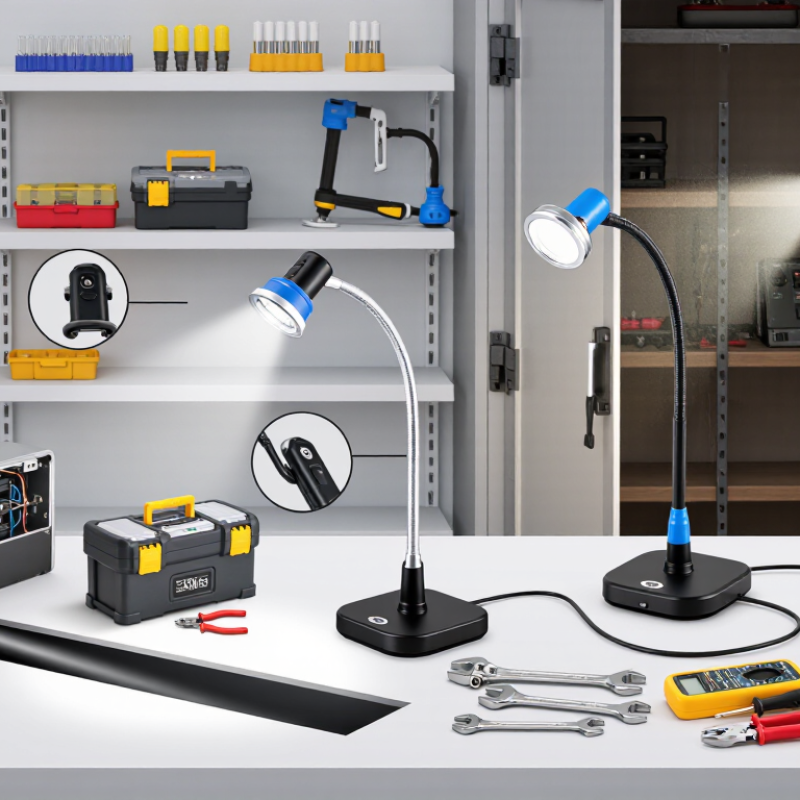
What Defines a Flexible LED Work Light?
A flexible LED work light is defined by how well it directs useful light into awkward spaces. Its head may tilt, swivel, or sit on a bendable neck, while a clamp, magnetic base, or stable stand helps keep it in place. Flexibility is about positioning, not just a soft or bendable body. That matters. A flexible LED strip, for example, may bend easily but offer little control over where its beam falls.
Look at the joints and supports as carefully as the light output. A lamp aimed beneath a sink should hold its position without slowly drooping; a magnet is helpful only on a suitable metal surface. Check brightness in lumens, but also consider beam spread: a tight beam can reveal a bolt, while a wider one lights a whole work area. Not always better. A high lumen rating may create glare in a small, reflective space.
Power and durability shape everyday use, too. Rechargeable models reduce cord clutter, while corded lights avoid pauses for charging. Check the stated runtime at the brightness level you actually plan to use, since maximum output can drain a battery faster. Look for a sturdy hinge, a grip that stays secure, and a housing suited to dust or occasional splashes. Still, no single feature proves a light is reliable; a clever arm is less useful if its joint loosens after repeated adjustments.
Which Work Conditions Should Guide Your Choice?
Choose a flexible LED work light around the job, not just its lumen rating. For close wiring, a focused beam and a stable, adjustable neck help reveal small markings. For a wide repair bay, a diffused beam reduces harsh shadows across tools and floor space. Check how the light attaches: a magnetic base suits steel frames, while a hook can keep it above a wet work surface. Look for a stated ingress-protection rating if dust or splashes are likely, and a tough housing if drops are possible.
Runtime matters on long shifts. Battery capacity, brightness setting, and cold conditions all affect how long a portable light stays useful. The U.S. Department of Energy’s 2022 Energy Savings Forecast of Solid-State Lighting estimated that solid-state lighting could save 569 terawatt-hours in 2035 against its baseline scenario. That national estimate supports the value of efficient lighting, but it cannot predict one work light’s runtime. I would not trust the lumen number alone; beam shape and mounting often matter more at the work surface.
Tips: Test the light at the actual distance, with your usual gloves on. Check whether its joint holds position without sagging. A small shadow can hide a screw head, and I have seen that overlooked in quick product checks. If you work outdoors, compare the stated temperature range and charging options before choosing.
| Work Condition | Useful Light Characteristics | Practical Selection Guidance | Why It Matters |
|---|---|---|---|
| Close-up repair or inspection | Adjustable beam, stable base or clamp, high color-rendering index (CRI) | Consider a focused beam for small work areas and a CRI of 80 or higher when distinguishing wire colors, finishes, or surface defects. | Accurate color perception and controllable light help reduce shadows and make detail work easier. |
| Large workshop or garage | Broad, diffuse output; multiple brightness settings; flexible positioning | Choose a wider beam or a light that can be aimed at different parts of the workspace. Compare lumen output with the area and task rather than choosing by wattage alone. | A broad beam can illuminate more of the work area, while adjustable output helps limit glare and wasted light. |
| Automotive work under a hood or chassis | Compact form, adjustable head, hook or magnetic mounting, impact-resistant housing | Look for a light that can fit into confined spaces and be secured without occupying both hands. Check that any magnet is suitable for the surfaces where it will be used. | Hands-free mounting and a movable head make it easier to direct light into awkward, shadowed areas. |
| Outdoor work in wet or dusty conditions | Sealed housing, protected switches and connectors, sturdy construction | Check the product’s IP rating for protection against dust and water ingress. For example, IP54 indicates limited dust ingress protection and resistance to water splashes; it does not mean the light is waterproof. | Environmental protection helps match the light to exposure, but the rating should be verified against the actual site conditions. |
| Moving between job sites | Rechargeable battery, compact body, low weight, carry handle or folding design | Compare stated runtime at the brightness setting you expect to use, charging time, battery replacement options, and whether the light can also operate while plugged in. | Battery runtime varies with output level, battery condition, and temperature, so a single maximum-runtime figure may not reflect everyday use. |
| Continuous or extended shifts | Reliable thermal management, replaceable or serviceable battery, stable mounting | Review operating-time information and any duty-cycle limits. A mains-powered model may be more suitable when charging access is available and uninterrupted operation is important. | Long operating periods can increase heat and battery demands; suitability depends on the light’s design and the work schedule. |
| Glare-sensitive or reflective work | Diffuser, adjustable brightness, indirect aiming options | Choose a model that can be aimed away from polished metal, glass, or the worker’s direct line of sight. Use a lower output setting when it provides sufficient visibility. | Reducing direct reflections and excessive brightness can improve visual comfort and help maintain clear visibility. |
| Uneven or crowded work areas | Stable non-slip base, secure clamp or hook, flexible neck or pivoting head | Match the mounting method to the available surfaces and check that the light remains secure when repositioned. | A stable mount keeps the beam where it is needed and reduces the chance of the light falling or being repeatedly adjusted. |
| Shared or changing tasks | Several output levels, adjustable color temperature if needed, simple controls | Prioritize easy-to-use controls and a range of settings. Neutral white light around 4000–5000 K is a common general-purpose choice, while preferences may vary by task and user. | Different tasks and users may benefit from different brightness and light color; adjustable settings provide more flexibility. |
| Selection note: Treat lumen output, runtime, beam angle, IP rating, CRI, battery capacity, and impact-resistance claims as product-specific specifications. Confirm them in the manufacturer’s documentation and select a light that suits the actual work environment and applicable safety requirements. | |||
How Do Brightness and Beam Design Affect Visibility?
Brightness is only useful when it reaches the work surface. A flexible LED work light should offer enough output for the task, with dimming to prevent harsh reflections on metal or glossy packaging. EN 12464-1:2021 specifies 500 lux for many detailed assembly and inspection tasks. That is a useful benchmark, not a universal setting. OSHA’s construction lighting standard sets 5 foot-candles, about 54 lux, for general construction areas; that minimum is not intended for close inspection. Check the actual work area with a lux meter, since distance and shadows can change readings quickly. Small detail, big difference.
Beam design shapes what you can see. A broad, diffused beam helps illuminate a bench evenly, while a narrower beam can reach into a cabinet or under a machine. Look for an adjustable head and a stable mount, so the light stays aimed when your hands are busy. Watch for glare and sharp shadows: both can hide scratches, labels, or wire colors even when the lamp appears bright. Color rendering also matters when distinguishing colored components; a high CRI can help, though it cannot fix poor beam placement. I’ve found that “more lumens” is an easy sales measure, but a badly aimed beam can still leave the important corner dark. Try the light at your real working distance before choosing.
How Should You Compare Flexibility, Power, and Durability?
Flexibility matters most when the light must reach around pipes, inside cabinets, or beneath a vehicle. Compare the neck’s bend range, how well it holds position, and whether the base stays planted on a crowded bench. A joint that slowly droops can be more frustrating than a limited angle. Try moving it with one hand; stiff controls may be awkward when you are wearing gloves. Small details matter.
Power is not just a lumen number. Check whether the beam lights a wide work area or concentrates brightness on one spot, then compare battery runtime at the setting you will actually use. A high setting may drain a battery faster than expected. For long shifts, a replaceable battery or corded option may be more practical. I tend to focus too much on maximum brightness, and that is not always useful.
Durability depends on the job site. Look for a solid hinge, protected charging port, and housing that can handle ordinary bumps. Check the stated dust and water resistance, but do not assume it can survive every spill or drop. If possible, inspect the grip and hinge before buying. A light can feel sturdy and still wobble after repeated adjustments.
Which Safety Features and Specifications Should You Verify?
A flexible LED work light should stay steady when its neck is bent and positioned. Check that the joints hold their angle without sagging, even when the lamp points downward at a wheel or cabinet hinge. The base should resist tipping on a workbench, and any clamp or magnet should grip securely. A loose neck is more than annoying; it can send light into your eyes or leave a task in shadow.
Verify the rated voltage, wattage, and expected operating time, especially for rechargeable models. Look for a suitable ingress-protection rating if dust or splashes are likely in your workspace. Check the cord for sturdy insulation and strain relief, and inspect the handle and casing for cracks or exposed wiring. Confirm that the light carries recognized safety markings for your region. A high lumen figure alone does not guarantee useful lighting; beam spread and glare matter too. It is easy to overvalue brightness and miss comfort.
Tips: Aim the lamp at the work surface, not your face. Test its reach before buying. If possible, bend the neck several times and see whether it stays put. Small detail, big difference. Also check whether the battery or cable adds awkward weight; a light that is technically flexible can still feel clumsy overhead.
How to Choose a Flexible LED Work Light?
Check the light’s IP rating against the water exposure expected at your worksite. This chart compares the water-protection digit defined by IEC 60529.
How to read it: IPX4 protects against splashing water; IPX5 against water jets; IPX6 against powerful water jets; and IPX7 against temporary immersion under specified test conditions. The “X” means no solid-particle rating is stated here. Choose a rating suited to your environment, and verify the complete rating and test details in the product documentation. IP ratings do not replace checks for electrical safety, heat protection, or a secure flexible mount.
