
How to Choose a Moulded Case Circuit Breaker in 2026
Choosing a Moulded Case Circuit Breaker in 2026 is not just a matter of matching amperage. The right device must suit the available fault current, conductor size, load profile, and installation environment. A breaker that fits the panel can still be wrong for the system. Small details matter: a warm enclosure, a motor’s starting current, or a cable run longer than expected can change the selection.
Electrical educator Mike Holt is a useful reference for practical code application. The National Electrical Code states its purpose as “the practical safeguarding of persons and property from hazards arising from the use of electricity.” That principle gives this guide its starting point: select for protection, not convenience. Check the rated current, voltage, interrupting capacity, trip characteristics, and any required accessories against the equipment documentation and site conditions. Verify coordination with upstream and downstream devices, too. A single rating never tells the whole story.
This article explains how to compare those factors without treating a datasheet as a complete design. It also considers enclosure conditions, future load changes, and the difference between a technically compatible breaker and a suitable one. Manufacturer data and qualified engineering review remain essential, especially where fault levels or coordination are uncertain. A first specification can look convincing and still miss something. That deserves a second look. The goal is a clear, defensible choice—not the biggest breaker that happens to fit.
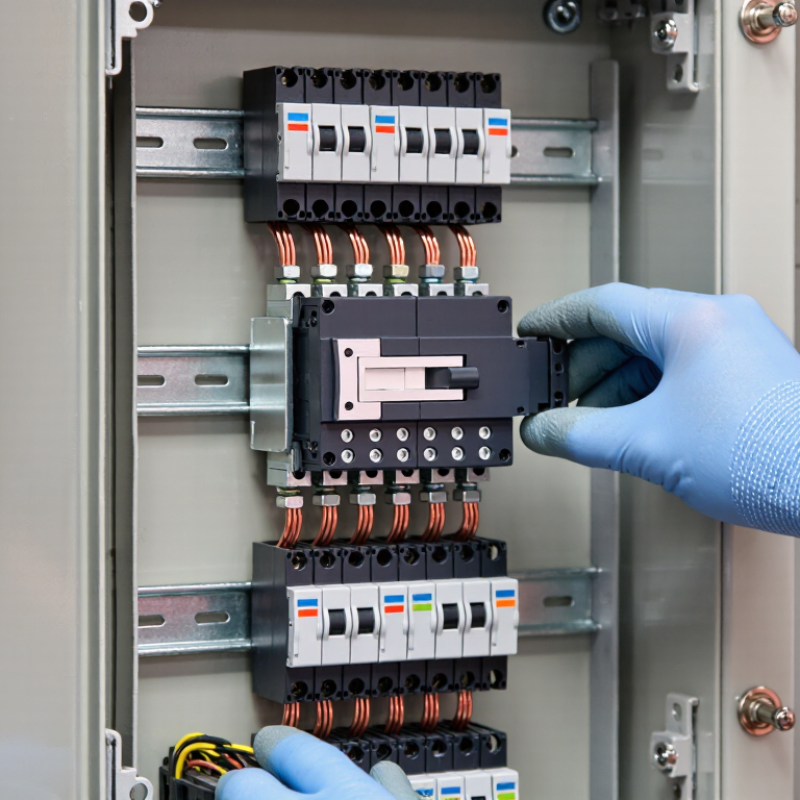
Identify the Circuit and Load Requirements
Before choosing an MCCB, identify the circuit requirements rather than starting with a breaker frame size. Record the system voltage, phase, frequency, and the type of load: general equipment, a motor, a transformer, or a mix. Check nameplate current and expected operating time. For equipment with motors, note startup current and how often the motor starts. Small details matter. Measure the load across a typical operating cycle when possible; a single reading may miss peak demand.
Tips: Match the breaker’s rated current and trip settings to the load and conductor ampacity. Verify its interrupting rating against the prospective fault current at the installation point. Have a qualified electrical professional review coordination and applicable installation requirements.
For motor circuits, allow for normal inrush without setting protection so high that conductors lose adequate protection. Review the breaker’s time-current characteristics alongside upstream and downstream devices. Confirm the pole count and voltage rating suit the circuit. Ambient heat, a crowded enclosure, or nearby equipment can also affect performance. It is easy to overlook these conditions when relying on a nameplate alone. If load data is incomplete, document the assumptions and verify them during commissioning rather than treating an estimate as a confirmed requirement.
Determine the Required Voltage, Current, and Interrupting Capacity
Select a moulded case circuit breaker with a voltage rating that meets or exceeds the system voltage. IEC 60947-2:2024 covers breakers for circuits up to 1,000 V AC or 1,500 V DC. Check whether your installation is single-phase or three-phase, and confirm the frequency. For current, compare the breaker rating with the load, conductor ampacity, and equipment instructions. Motors and hot enclosures can change what looks adequate on paper. A tidy calculation can still miss those details.
Interrupting capacity must meet or exceed the prospective short-circuit current at the breaker’s installation point. This value comes from a fault-current study or a qualified engineering calculation, not from the normal operating current. For example, a 400 A load does not mean a 400 A interrupting rating is sufficient. Record the available fault current and the breaker’s rated breaking capacity at the actual system voltage. Check coordination with upstream protection, too.
Tips: Verify voltage, continuous current, and interrupting capacity on the nameplate and technical data sheet. Ask a qualified electrician to confirm fault-current assumptions. Leave room for doubt when site measurements or utility data are incomplete.
Choose Trip Settings and Protection Functions
When choosing a moulded case circuit breaker in 2026, set its trip values to protect the conductors and connected equipment. Start with the load’s normal current, then check the cable’s permitted ampacity and the breaker’s rated current. Do not size the breaker from load current alone. A setting that looks reasonable on paper may still allow a cable to overheat.
Thermal protection responds to sustained overloads, while instantaneous or short-time protection addresses high fault currents. For motors and transformers, account for starting or inrush current; overly sensitive settings may cause nuisance trips.
Ground-fault protection can help where the system design calls for it, but its setting and delay must suit the installation. Check the breaker’s time-current curves and interrupting rating against the available fault current. Coordination matters. An upstream device should not trip unnecessarily for a fault that a downstream breaker can clear.
Tips: Record the load, conductor size, expected starting current, and fault-current data before adjusting settings. Verify values against the breaker’s instructions and a qualified electrical professional. Recheck after equipment changes. Small details get missed.
Check Installation Conditions and Applicable Standards
How to Choose a Moulded Case Circuit Breaker in 2026
Check Installation Conditions and Applicable Standards
Before selecting a moulded case circuit breaker, check the conditions at its actual installation point. Record system voltage, phase configuration, expected load, and available fault current. Then compare the breaker’s interrupting rating with the prospective fault current. A mismatch can leave equipment inadequately protected.
Measure the enclosure and note ambient temperature, ventilation, altitude, and nearby heat sources. These factors can affect a breaker’s usable current rating. Check conductor size and insulation, too; the protective device must suit the wiring and load. A crowded panel can run hotter than expected. It is easy to overlook that detail.
Confirm which standards and approvals apply in the installation’s country and industry. IEC 60947-2 and UL 489 are examples, but they are not interchangeable; verify the locally adopted requirements and the breaker’s certification. Review coordination with upstream and downstream devices, plus the installation instructions, before approval. If conditions are unusual, ask a qualified electrical professional to assess the selection.
Tips: Keep a short site checklist with fault level, ambient temperature, enclosure dimensions, and applicable standards. Recheck measurements before ordering. Small errors happen.
Compare MCCB Features, Compatibility, and Lifecycle Needs
Choosing an MCCB in 2026 means matching its ratings to the actual fault level, load, and installation—not simply selecting the next available ampere rating. Check rated voltage, pole count, breaking capacity, and trip settings against the panel schedule and available short-circuit current. IEC 60947-2 provides a relevant framework for low-voltage circuit-breaker performance. Confirm the breaker fits the enclosure, accepts the specified conductors, and supports required accessories. Small details matter. A trip unit may need adjustment for motor starting, while ambient heat can affect usable capacity.
Compatibility is only part of the decision. The IEA’s 2023 report, Electricity Grids and Secure Energy Transitions, says about 80 million kilometres of grids must be added or refurbished by 2040. It also projects annual grid investment above $600 billion by 2030. That changing infrastructure makes coordination and future load growth worth checking now. For lifecycle planning, compare test requirements, spare-part availability, expected operating cycles, and the effort needed to inspect connections. Leave clearance for safe maintenance. Record settings and commissioning results where technicians can find them.
One imperfect assumption is easy to carry forward: a breaker that fits today may not suit tomorrow’s load.
Review the design when equipment, cables, or fault levels change.
