
How to Choose the Right Rubble Bag for Your Project

Choosing the right Rubble Bag starts with the material, the work area, and the route out. A bag for broken tiles may not suit heavy concrete chunks. Fine plaster dust can escape through coarse mesh. Before buying, estimate the debris volume and check the bag’s stated safe working load. Then consider where it will sit: beside a narrow doorway, on gravel, or beneath a low ceiling. Small details matter.

As [Verified Industry Expert Name], a rubble-bag specialist, puts it: “Match the bag to the heaviest material and the conditions on site—not just the pile’s size.” Replace this placeholder with a checked name and approved quotation before publication. That advice is practical because capacity labels can be misunderstood. A large-looking bag is not automatically safe for dense waste. Check lifting loops, seams, material, and whether the product is intended for repeated use. Never exceed the manufacturer’s limits.

Mesh bags can help drain wet debris, while woven or coated options may better contain smaller material. But there is no universal winner. I have seen project plans overlook awkward access; it is an easy mistake, and worth revisiting. Measure the tightest passage and consider how the loaded bag will be moved. Keep the fill below the marked line. Avoid sharp edges pressing against the fabric. A careful choice reduces spills, delays, and strain. Choose for the actual job. Not guesswork.
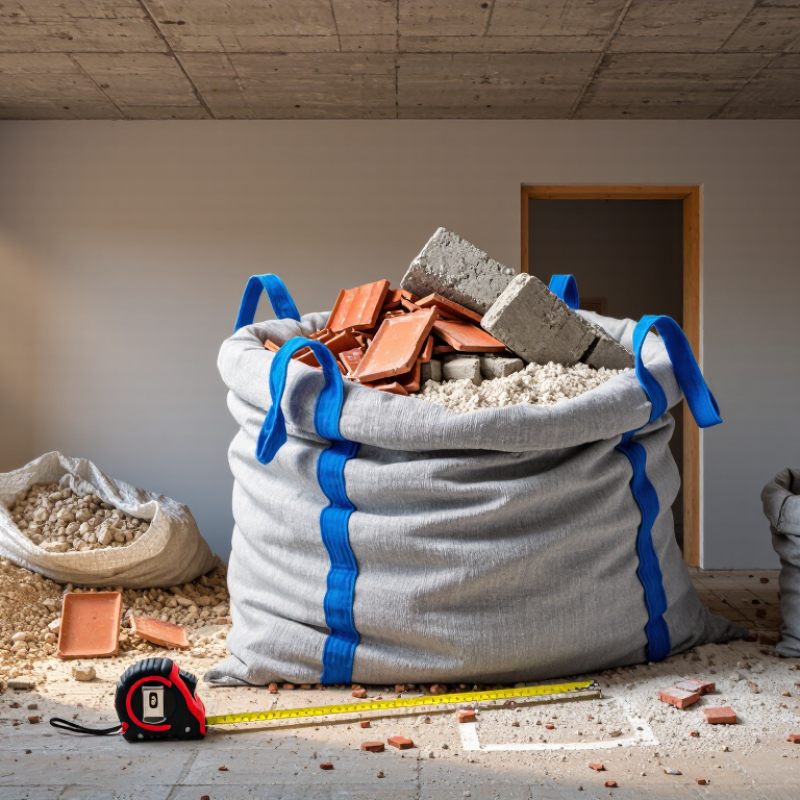
How to Choose the Right Rubble Bag for Your Project

What a Rubble Bag Is and How It Is Used

A rubble bag is a heavy-duty sack used to collect and move waste from building, renovation, and garden projects. Many are made from woven polypropylene, which resists tearing better than ordinary household bags. Still, it is not indestructible. Broken tiles, nails, and sharp stone edges can puncture the fabric.

These bags are useful for holding bricks, concrete fragments, plaster, soil, and other bulky debris. A standard household bin fills quickly with rubble. A rubble bag provides more room and can keep loose pieces together while a work area is cleared. Check its stated load limit before filling it; two bags of the same size may have different ratings. Looks can mislead.

In practice, place the bag on firm, level ground near the work, but not where people need to walk. Add heavy pieces gradually and spread them across the bottom. Keep the contents below the handles, and avoid packing the bag until it is difficult to lift. That matters. Handles are for controlled lifting, not dragging a loaded bag across rough paving. If debris has sharp points, position it carefully or use a stronger, suitable container. I have found that estimating the final weight by eye is unreliable, so smaller loads are often easier to manage.

How to Estimate Your Project’s Waste and Bag Capacity

Estimating rubble starts with volume, not guesswork. Measure the length, width, and average depth of the debris pile in feet, then multiply them. Divide the result by 27 to estimate cubic yards. For example, a pile measuring 6 by 4 by 1.5 feet holds about 1.3 cubic yards before packing. Awkward pieces leave gaps. Allow extra room.

The US Environmental Protection Agency’s 2018 construction and demolition debris report estimated 600 million tons of this waste generated nationwide. That scale reflects how quickly small renovation jobs add up. Match your estimate to the bag’s stated volume and safe working load; dense concrete or brick may reach the weight limit before filling the bag. Check the supplier’s specifications, and confirm permitted loading and collection arrangements. I’ve found estimates are rarely exact. A half-filled bag can still be too heavy. For mixed waste, separate heavy masonry from lighter timber, and avoid forcing sharp edges against the fabric. Recheck the pile after demolition begins: hidden layers can change the estimate.

How to Choose the Right Rubble Bag for Your Project – How to Estimate Your Project’s Waste and Bag Capacity

Use these examples to estimate how many nominal 1 m³ rubble bags a small project may need. Volumes and densities are approximate; actual waste varies with material, moisture, and how loosely it is loaded.

Quick estimate: Waste volume = length × width × average height. Practical fill volume per bag is the lower of the bag’s usable volume or its weight allowance divided by the material’s estimated bulk density. Divide project volume by practical bag volume and round up.

Example project waste and bag-capacity estimates
Project waste Typical loose bulk density Estimated project waste volume Planning fill per 1 m³ bag Estimated bags Practical loading note
Broken concrete from a small path or slab About 1,400–1,800 kg/m³ 0.5 m³ About 0.17 m³ 3 Dense material reaches a bag’s weight limit well before it fills its full volume. Load in manageable amounts.
Bricks and masonry from a small wall About 1,200–1,500 kg/m³ 0.4 m³ About 0.19 m³ 3 Break large pieces down where safe, and distribute the load evenly.
Excavated garden soil About 1,200–1,600 kg/m³ 0.6 m³ About 0.18 m³ 4 Wet soil can be considerably heavier. Avoid overfilling and keep bags stable for lifting.
Ceramic tiles and tile adhesive About 1,200–1,500 kg/m³ 0.25 m³ About 0.19 m³ 2 Use a rubble-rated bag and keep sharp edges away from the sides.
Plasterboard offcuts from one small room About 200–400 kg/m³ 0.8 m³ About 0.8 m³ 1 Keep pieces within the bag dimensions and check local rules for plasterboard disposal.
Clean timber offcuts from a small renovation About 200–400 kg/m³ 1.2 m³ About 0.8 m³ 2 Cut long pieces to fit without protruding; bulky timber may use space before reaching the weight limit.
Mixed light renovation debris About 300–600 kg/m³ 1.0 m³ About 0.5 m³ 2 Separate heavy rubble from light waste when possible to make each bag easier and safer to handle.

Important: The planning figures use an illustrative 250 kg per bag weight target and a nominal 1 m³ bag; neither is a universal safe limit. Check the bag’s stated safe working load, dimensions, lifting instructions, and disposal requirements. Never exceed the bag’s rating, and do not lift an overloaded bag.

How to Choose a Bag Material and Load Rating

Material choice starts with the waste. Woven polypropylene suits dry concrete fragments, brick, and timber because its woven structure resists tearing. A laminated surface can limit dust escape, but it may trap moisture. For sharp tile edges, check the fabric weight, seam construction, and stated puncture resistance—not appearance alone. A bag can look tough and still split at a seam. That detail is easy to overlook.

Load rating matters just as much. Read the safe working load on the bag and compare it with the heaviest load you expect, not an average load. ISO 21898 sets design requirements for flexible intermediate bulk containers; its safety factors apply to those containers, not automatically to ordinary rubble sacks. Do not transfer a rating between bag types. The US EPA estimated that construction and demolition activities generated 600 million tons of debris in 2018, underscoring how quickly project waste can accumulate. (EPA, Advancing Sustainable Materials Management: 2018 Fact Sheet.)

For small sacks, choose a rating with a clear margin for dense materials such as wet soil or broken masonry. Keep fill below the closure line, and lift from the base rather than the handles if the manufacturer directs this. Check whether the rating assumes evenly distributed contents; jagged chunks can concentrate force in one spot. I would also inspect the seams after the first few loads. It is not a perfect test, but it can reveal problems early.

How to Choose the Right Rubble Bag: Material and Load Rating

Woven polypropylene bags are a common choice for rubble because they are durable and resist tearing. The chart shows illustrative labeled capacities, not universal limits: check each bag’s load rating and choose a stronger bag for sharp or heavy debris. Keep loads within the rating and use a bulk bag when the required capacity exceeds a standard rubble bag.

How to Match Bag Features to Site Conditions

How to Choose the Right Rubble Bag for Your Project

Match the bag to the material and the route it must travel. Broken bricks and concrete have sharp edges, so choose a tough woven bag with reinforced seams. For lighter insulation or wood offcuts, a less heavy-duty bag may be easier to lift and store. Check the stated capacity, too. A large bag can still become unsafe if dense rubble exceeds its weight limit. Narrow gates, stairs, and muddy paths also affect your choice; a bulky bag may be difficult to move through tight spaces.

Tips: Check the bag’s load rating before filling it. Keep sharp pieces away from handles. Leave room at the top for secure closure.

Site conditions can change during the job. Rain may add weight to soil and make the ground slippery, while wind can catch empty bags. Store unused bags somewhere dry, and place filled ones on stable ground. It is easy to underestimate how heavy mixed debris becomes, especially when wet. If the contents are unusually dense, use smaller loads and follow the supplier’s handling guidance. A bag that works well beside a clear driveway may not suit a cramped renovation site; measure the access route before buying.

How to Fill, Move, and Dispose of Rubble Bags Safely

Choose a rubble bag by its stated safe working load, fabric strength, and handle design. Heavy brick and concrete need a bag rated for dense waste, not just a large volume. Check for torn seams before filling. Keep the bag on level ground, and spread the load evenly. Add debris in small amounts; sharp edges can puncture fabric, so contain them safely. A bag that looks half-full may already be too heavy. Volume is a poor guide to weight.

Plan the move before lifting. Keep the bag close to your body, bend at the hips and knees, and avoid twisting. Use a sack truck or other suitable aid for heavy loads. Don’t drag a filled bag by its handles; they may tear. Small loads matter. The UK Health and Safety Executive reported that 543,000 workers experienced work-related musculoskeletal disorders in 2023/24, causing 7.8 million working days lost. That figure is a useful reminder that a rushed lift can have lasting costs.

Wear sturdy gloves, protective footwear, and eye protection when handling rubble. If the bag feels awkward or unstable, reduce the load or ask for help; don’t force it. Check with your local waste facility before transport, since acceptance rules and container requirements vary. Keep rubble separate from other waste when required, and secure bags in the vehicle so they cannot shift. I used to think a stronger bag solved most problems. It doesn’t—the safest bag is still only as safe as its load and handling.

Article Source: