
How to Choose an External Consumer Unit in 2026
Choosing an External Consumer Unit in 2026 is not just a matter of finding a weatherproof box. It is a decision about electrical safety, site conditions, and future use. A unit beside a garden office may face rain, dust, and sharp temperature changes. One mounted under a sheltered porch has different demands. Small details matter.
Start by considering the circuits it must serve, the available supply, and the environment around the installation. Check the enclosure’s stated protection rating and confirm that its materials and design suit the location. The rating alone is not enough. Also consider capacity for likely future circuits, clear labeling, and ease of inspection. These details can make maintenance less confusing years later.
Requirements and product specifications can change, and suitability depends on the installation. Verify current manufacturer documentation and applicable local standards rather than relying on an old checklist or a product photograph. A qualified electrician should assess the supply, protective devices, cable entry, and mounting position before purchase or installation. That step may feel cautious. It is worthwhile. I have seen how an attractive, low-cost choice can become inconvenient when there is too little room for the circuits actually needed. Still, extra capacity should have a practical reason; bigger is not automatically better. This guide explains the main points to compare, the questions to ask, and the common assumptions worth reconsidering before choosing an External Consumer Unit in 2026.
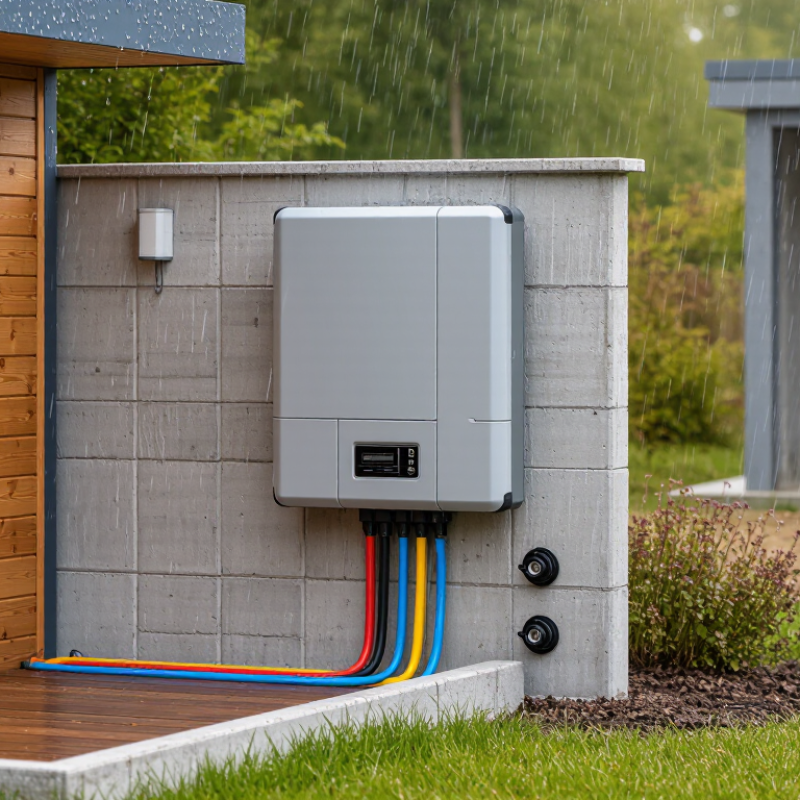
What an External Consumer Unit Is and How It Works
An external consumer unit is a weather-resistant enclosure that holds the protective devices for electrical circuits outside a building. It may supply a garage, garden room, workshop, or other outbuilding. Inside, you will typically find a main switch and circuit breakers, with residual-current protection provided by an RCD or individual RCBOs. The exact arrangement depends on the installation.
Here is the basic process. Power reaches the unit through a correctly sized cable from the building’s electrical supply. The main switch can disconnect the outgoing circuits, while each breaker trips if it detects an overload or short circuit. RCD protection responds to certain current leaks, helping reduce the risk of electric shock. It is not a substitute for safe wiring. Not magic.
The enclosure’s IP rating indicates its tested resistance to dust and water, but placement still matters. A unit under a dripping gutter faces different conditions from one on a sheltered wall. Cable entry points, seals, condensation, and accessible isolation all deserve attention. I would not choose by enclosure size alone; spare capacity can be useful, yet an oversized unit does not fix a poor design. In 2026, have a qualified electrician assess the supply, earthing, circuit loads, and site conditions before selecting or installing one.
How to Choose an External Consumer Unit in 2026 — What an External Consumer Unit Is and How It Works
An external consumer unit is a distribution board installed outdoors or in another exposed location. It receives electricity from the supply and distributes it to circuits, while protective devices help disconnect circuits when certain faults occur. Suitability depends on the installation, environment, circuit requirements and applicable local regulations.
| Decision or Feature | What It Means | What to Check When Choosing |
|---|---|---|
| Consumer unit | An enclosure containing a main switch, a busbar and protective devices for one or more electrical circuits. | Confirm that the unit is intended for the installation location and is compatible with the supply and circuits. |
| How power is distributed | The incoming supply connects to the unit; the busbar distributes power to circuit protective devices, which feed individual circuits. | Have a qualified electrician assess the supply arrangement, circuit design and required protective devices. |
| Outdoor enclosure rating | An IP rating describes protection against access, solid objects and water under specified test conditions. | Select an enclosure rating suitable for the actual exposure to rain, dust, spray and other site conditions. An IP rating alone does not guarantee protection against every installation condition. |
| Ingress Protection (IP) example | For example, IP65 indicates dust-tight protection and protection against water jets under the relevant test conditions. | Do not treat IP65 as proof that an enclosure is suitable for immersion, every type of water exposure or any mounting position. Follow the manufacturer’s instructions. |
| Residual Current Device (RCD) | An RCD detects certain imbalances between live and neutral currents and can disconnect a circuit to reduce the risk of electric shock and fire. | Check which circuits require RCD protection and whether the proposed arrangement provides suitable coverage and selectivity. |
| Residual Current Breaker with Overcurrent protection (RCBO) | An RCBO combines residual-current protection with protection against overload and short-circuit current for an individual circuit. | Individual RCBOs can help limit loss of supply to the affected circuit, but device selection must match the circuit and installation. |
| Miniature Circuit Breaker (MCB) | An MCB provides overcurrent protection against overloads and short circuits. It does not, by itself, provide RCD protection. | Check the circuit’s design, cable characteristics and protective-device requirements; do not select an MCB by current rating alone. |
| Surge Protective Device (SPD) | An SPD limits transient overvoltages and diverts surge current, helping protect connected electrical equipment. | Ask the electrician whether an SPD is required or appropriate for the installation and how it should be coordinated with the supply and other protection. |
| Number of usable ways | A “way” is a position for a protective device. Some units also need space for accessories or future circuits. | Count the circuits and accessories required now, then discuss reasonable spare capacity. Check the actual device layout, not just the advertised way count. |
| Material and corrosion resistance | Enclosures may use different materials and finishes; outdoor exposure can include moisture, sunlight, temperature changes and corrosive conditions. | Choose a unit whose stated environment and mounting instructions suit the site. Check seals, cable-entry arrangements and maintenance requirements. |
| Location and mounting | Position affects exposure to weather, physical damage, access and the route taken by cables. | Choose a location that follows the manufacturer’s instructions and applicable rules, and allows safe access for operation, inspection and maintenance. |
| Compatibility and certification | The enclosure, busbar and protective devices must be suitable as an assembled system; incompatible parts can compromise safety and performance. | Ask the electrician to verify compatibility, ratings, documentation and conformity with the regulations applicable in the installation’s location. |
| Installation and testing | Installing or changing a consumer unit involves electrical hazards and requires appropriate design, inspection and testing. | Use a qualified electrician familiar with local requirements. Request the relevant test results and certification after the work. |