Top Industrial Curtain Wall Manufacturers in China
Industrial Curtain Walls shape how factories, warehouses, and production halls handle weather, daylight, and daily operations. A well-designed system can admit useful light while helping control rain, wind, heat, and noise. Yet performance depends on more than glass. Frame strength, drainage paths, thermal breaks, gaskets, and installation quality all matter.
Chinese manufacturers serve varied project needs, from standard aluminum systems to engineered facades for large industrial buildings. Comparing suppliers takes careful evidence. Building-science expert Joseph Lstiburek is often associated with the reminder, “Water is the enemy.” For curtain walls, that warning makes practical sense: a small drainage or sealing flaw can become a costly maintenance problem. Ask manufacturers for project references, product test documentation, material specifications, and clear details about installation support. Look closely.
A low quoted price may not reveal the full lifecycle cost. Nor does an impressive showroom prove performance on a demanding site. This guide introduces leading Industrial Curtain Walls Manufacturers in China and outlines useful points for comparing their capabilities. It considers product range, engineering support, quality controls, customization, and communication during procurement. Readers should verify claims against project requirements and independent documentation; brochures alone are not enough. Some supplier information may be difficult to compare directly, and that uncertainty deserves attention. The right choice is not simply the largest factory or the longest product list. It is a manufacturer whose documented system, production capacity, and support fit the building’s actual conditions.
What Industrial Curtain Wall Systems Are and Where They Are Used
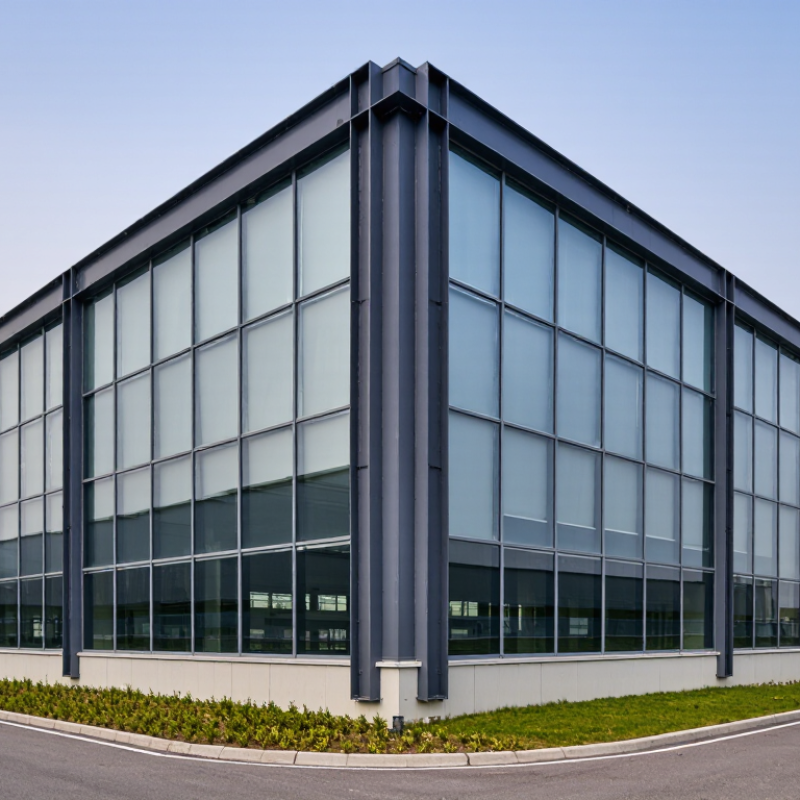
Industrial curtain wall systems form a building’s outer envelope without supporting its main structural loads. Their frames, often aluminum or steel, hold glass, insulated panels, or metal cladding. The combination depends on the work happening inside. A bright assembly floor may benefit from carefully placed glazing, while a dusty production area may need more opaque panels. The distinction matters.
These systems are used on factories, warehouses, research buildings, and other large facilities. They help manage weather exposure, daylight, air leakage, and indoor comfort. At a warehouse loading bay, for example, durable insulated panels may make more sense than extensive glass. In a quality-control room, glazing can help staff observe nearby operations. Small details count: joint design, drainage paths, and access for cleaning affect long-term performance. A facade can look sleek but still be difficult to maintain.
When evaluating manufacturers in China, buyers should examine engineering support, fabrication quality, testing records, and experience with similar building conditions. Ask how the system handles local wind loads, temperature changes, and water penetration. Specifications on paper are useful, but installation quality can change the result. This is easy to underestimate. Even a well-designed curtain wall may perform poorly if site measurements or seals are inconsistent. A mock-up and clear inspection plan can reveal problems before they spread across the facade.
How China’s Industrial Curtain Wall Industry Is Structured
China’s industrial curtain wall sector is a coordinated supply chain, not a single type of manufacturer. Design teams translate building requirements into façade drawings and performance targets. System fabricators turn those designs into frames, glazing assemblies, and installation details. Aluminum extruders, glass processors, gasket makers, and hardware suppliers provide the components. Some companies manage several stages; others focus on one. That distinction matters. A supplier may provide profiles and glass without taking responsibility for engineering or site installation.
Industrial projects often involve large façades, repetitive production, and demanding maintenance schedules. Wind pressure, indoor temperature control, moisture, and exposure to chemicals can all affect system selection. Buyers should clarify who prepares structural calculations, coordinates interfaces, inspects fabrication, and supports installation. Request project-specific drawings, material records, and relevant test reports; a certificate alone may not show how an assembly performs in the intended building. Factory visits can reveal practical details, such as storage conditions and sealant application. The chain is not always tidy. Responsibilities can overlap, and handoffs are easy to underestimate. Clear written scopes help expose gaps before frames arrive on site.
Key Criteria for Evaluating Curtain Wall Manufacturers
When assessing industrial curtain wall manufacturers in China, look beyond price and renderings. Check whether the supplier can provide project-specific structural calculations, full-scale mock-up results, and traceable material records. Ask for air-leakage, water-penetration, and wind-pressure test reports, and confirm that the tested assembly matches the proposed design. Details matter. Glass thickness, gasket joints, and drainage paths can affect performance on a windy, rain-soaked façade.
Thermal performance deserves equal attention. The International Energy Agency’s Global Status Report for Buildings and Construction 2023 states that buildings and construction accounted for 34% of global energy demand and 37% of energy- and process-related CO₂ emissions in 2022. These figures cover the wider sector, not curtain walls alone, but they show why verified U-values, thermal-bridge details, and condensation assessments matter. Review laboratory reports and project references, then check whether factory quality controls cover coating, assembly, and packaging. A neat sample is useful, but it cannot prove consistent production. I would still question vague test scopes.
Tips: Request a sample inspection record and a clear list of exclusions. Confirm who supervises installation, how defects are logged, and what evidence supports the warranty. If answers rely only on promises, pause.
Profiles of Leading Industrial Curtain Wall Manufacturers in China
China’s industrial curtain-wall manufacturers are best assessed by project capability, not catalogue claims. The 2024/2025 Global Status Report for Buildings and Construction, from UNEP and the Global Alliance for Buildings and Construction, reports that buildings and construction used 32% of global energy in 2023 and generated 34% of energy-related CO₂ emissions. That pressure makes thermal breaks, airtight joints, and traceable material testing important. Details matter.
Large façade integrators typically coordinate engineering, glass processing, system sourcing, and installation for factories or logistics campuses. Their value lies in connecting shop drawings, mock-up tests, and site sequencing. Ask for air-leakage and water-penetration results from projects with comparable spans. A glossy brochure is not evidence. Specialist system manufacturers, by contrast, focus on repeatable profiles, drainage paths, and interfaces with steel structures. Their technical teams should explain how joints accommodate movement and temperature changes.
Regional fabricators may offer flexible production and shorter delivery routes, but capabilities vary. Inspect sample corners, sealant continuity, and coating consistency under good light. Request project references and quality records, not just product sheets. One caution: published performance figures can be difficult to compare when test methods differ. A factory visit helps, though it cannot replace independent testing.
How to Compare Manufacturers by Products and Project Experience
When comparing industrial curtain wall manufacturers in China, look beyond broad product labels. Check whether their systems suit your building’s span, wind exposure, thermal targets, and maintenance needs. Ask for drawings, material specifications, and test reports for the exact system under review. A polished catalogue is useful, but it cannot answer every site-specific question.
Project experience helps reveal how a manufacturer handles real constraints. Request examples with similar building height, façade geometry, and installation conditions. Check what the manufacturer supplied, who coordinated engineering, and how changes were managed. Photos alone are weak evidence. Ask for project dates, scope, and references you can verify. Details matter.
Compare practical capabilities, too: custom fabrication, quality checks, packaging, delivery planning, and technical support during installation. A factory visit may show how components are inspected and labeled before shipment. Ask how damaged parts or drawing revisions are handled; these small issues can affect schedules. A neat brochure can still hide gaps. I would not treat one impressive project as proof of consistent performance. Evaluate several examples, and note where evidence is missing.