10 Tips for Buying Mesh Bags in Bulk
Buying Mesh Bags in bulk can reduce unit costs, but only when the product fits its intended use. A produce retailer needs different mesh, dimensions, and stitching from a beach shop or promotional supplier. A low quote can look attractive beside a sample, then disappoint when bags arrive with weak seams or inconsistent sizing. Small details matter.
The broader packaging context makes careful purchasing worthwhile. The OECD’s Global Plastics Outlook reports that the world generated 353 million tonnes of plastic waste in 2019, with only 9% ultimately recycled. That figure covers plastic waste generally, not mesh bags specifically. Still, it highlights why buyers should ask about material composition, durability, and realistic end-of-life options instead of relying on vague “eco-friendly” claims. The UNEP Food Waste Index Report 2024 estimates that 1.05 billion tonnes of food were wasted in 2022. Mesh packaging cannot solve food waste alone, but suitable bags may help retailers handle and display produce more practically.
A dependable bulk order starts with clear questions. Confirm bag dimensions, mesh opening, handle strength, color consistency, and the weight each bag is designed to carry. Request a physical sample, inspect the seams, and test it with the products customers will actually use. Ask suppliers for written specifications and supporting documentation for material or performance claims. Compare freight, packaging, and defect policies—not just the price per piece. Ten useful checks can make that comparison easier. No supplier is perfect. A sample may still miss real-world handling conditions, so test before committing to a large order.
Define Your Requirements, Use Cases, and Order Quantity
10 Tips for Buying Mesh Bags in Bulk
Define Your Requirements, Use Cases, and Order Quantity
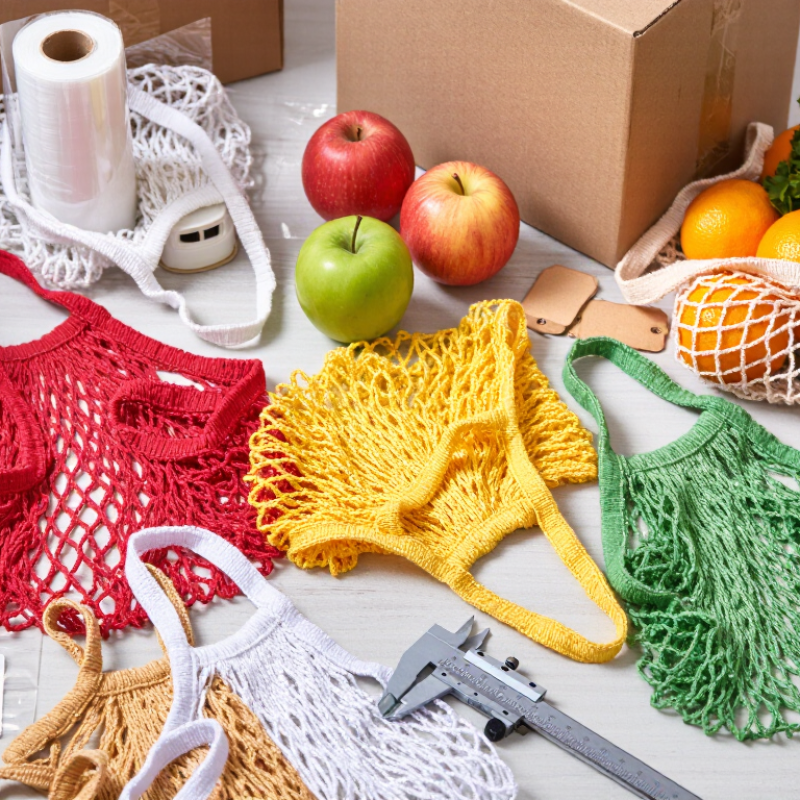
Before requesting quotes, write down what each bag must carry and where it will be used. Produce, laundry, sports gear, and retail packaging need different mesh sizes and strengths. Note the item’s weight, dimensions, and whether it will be wet, stored outdoors, or handled repeatedly. A few real samples help; estimates alone can be misleading.
Tips: Measure the largest item, then allow room for easy loading. Check mesh openings, seams, handles, and closures against your use case. Ask for a sample and test it with a realistic load. A spreadsheet can look precise and still miss a messy packing line.
Set your order quantity using expected use over a specific period, such as one season or quarter. Include a modest buffer for damaged bags or demand changes, but avoid ordering far beyond available storage. Confirm whether quoted quantities refer to individual bags, bundles, or cartons. Also ask about size and color variations, packing dimensions, and lead time. Compare the landed cost per usable bag, not only the unit price. If your forecast is uncertain, a smaller first run may reveal practical issues before you commit to a larger order. That can feel slower. It may prevent a costly mismatch.
10 Tips for Buying Mesh Bags in Bulk - Define Your Requirements, Use Cases, and Order Quantity
| Tip | Requirement to Define | Typical Use Case | Illustrative Order Plan | What to Check |
|---|---|---|---|---|
| 1. Match the bag to its purpose | Decide what the bag must hold, carry, or contain. | Produce, toys, laundry, retail packaging, or equipment organization. | Estimate demand separately for each use case rather than ordering one size for every task. | Confirm that mesh openings, construction, and closure suit the contents. |
| 2. Choose the appropriate material | Specify fiber type and any required care or performance properties. | Polyester or nylon mesh is commonly used for reusable storage and organization; cotton mesh is also used for produce bags. | Order a small sample set before committing to a large run. | Ask for fiber composition, care instructions, and any relevant product test documentation. |
| 3. Specify dimensions and usable capacity | Define bag width, height, depth or gusset, and intended load. | Small drawstring bags for accessories; larger gusseted bags for bulky items. | Split quantities by size based on the expected item mix—for example, 60% medium and 40% large. | Check whether listed measurements are flat dimensions and confirm tolerances with the supplier. |
| 4. Select mesh opening size | Decide how much airflow or visibility is needed and whether small items could escape. | Open mesh can aid ventilation; finer mesh is more suitable when contents are small or need more coverage. | Test the opening size with representative contents before setting the full order split. | Request a physical sample; product descriptions may not show mesh scale clearly. |
| 5. Choose the closure and handles | Specify drawstring, zipper, toggle, handles, or another closure. | Drawstrings suit lightweight storage; handles can be useful for carrying or retail display. | Allocate quantities by closure type only where different users or tasks require them. | Check stitching, cord length, hardware, and ease of opening and closing. |
| 6. Confirm load and durability needs | Set a realistic maximum load and expected frequency of reuse. | Frequent carrying or heavier contents require closer attention to seams and handle attachment. | Use sample testing to decide whether the planned quantity should be divided across different constructions. | Request the supplier’s stated load guidance and test method; do not infer capacity from appearance alone. |
| 7. Plan colors and identification | Choose colors, labels, or other identification based on sorting and presentation needs. | Color-coding can help distinguish sizes, departments, or contents. | Keep the first order to a few colors unless demand for each color is established. | Ask about color consistency between production batches and any minimum quantity per color. |
| 8. Calculate quantity from actual demand | Use forecast usage, stock on hand, and the replenishment period. | A business using 500 bags per week may plan for 4 weeks of demand plus a 10% buffer: 500 × 4 × 1.10 = 2,200 bags. | Illustrative only: subtract usable inventory and adjust the buffer to match demand variability and storage capacity. | Avoid ordering more than can be stored or used before specifications or needs change. |
| 9. Compare total landed cost | Compare unit price alongside shipping, duties where applicable, packaging, and setup costs. | Relevant for domestic and international bulk purchases. | Request quotations at several quantities that fit your forecast, such as 500, 1,000, and 2,000 units. | Confirm currency, delivery terms, production lead time, and whether quoted prices include customization. |
| 10. Approve a sample and quality criteria | Agree on measurable requirements before approving full production. | Useful for any bulk order, especially when size, color, or construction is customized. | Order samples first, then set the production quantity after checking them against the approved specifications. | Record acceptable dimensions, materials, stitching, color, packaging, and inspection expectations in writing. |
Quantity examples are planning illustrations, not universal recommendations. Confirm product specifications, minimum order quantities, and lead times directly with the supplier.