
What is UVLED Flatbed Printing and How Does it Work?

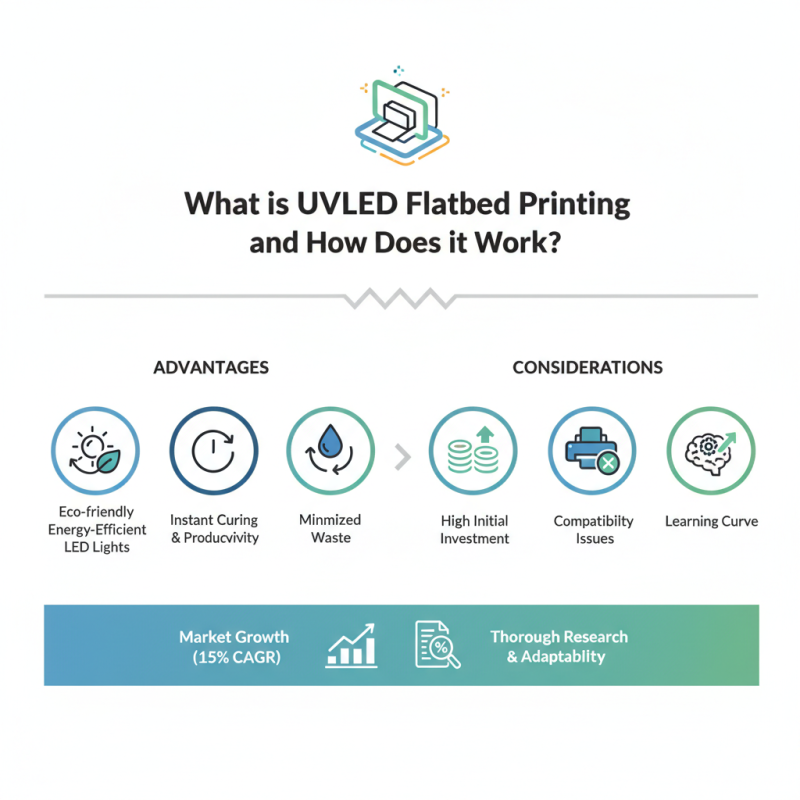
UVLED Flatbed Printing is revolutionizing the printing industry. This innovative technology allows for high-quality printing on various substrates. According to a recent market analysis, the UVLED printing market is expected to grow at a CAGR of 15% over the next five years. This growth reflects the increasing demand for eco-friendly printing solutions.

UVLED Flatbed Printing offers significant advantages. It uses energy-efficient LED lights that cure inks instantly. This process minimizes waste and maximizes productivity. However, it is essential to consider potential drawbacks. The initial investment can be high, and not all printers are compatible with UVLED technology. As with any new technology, there is a learning curve that users must navigate.

In this rapidly evolving landscape, understanding UVLED Flatbed Printing's intricacies is crucial. Companies must remain adaptable to keep pace with advancements. Conducting thorough research is necessary for effective implementation. The industry is at a pivotal point, where embracing UVLED technology can lead to both challenges and exciting opportunities.
What is UVLED Flatbed Printing and How Does it Work?

What is UVLED Flatbed Printing?

UVLED flatbed printing is an innovative technology that combines UV light with LED curing. This process allows for high-quality printing directly onto various surfaces. Materials like wood, glass, metal, and plastic can be used. The versatility opens doors for creative designs and applications.

These printers use UV light to cure ink instantly. This means you get vibrant colors and sharp images right away. No long drying times are needed. It’s perfect for fast-paced projects. However, you must understand the material compatibility. Some surfaces might not react well with UV inks. Testing beforehand can save time and resources.

**Tip:** Experiment with different materials. You might discover unique finishes that stand out.

Another key aspect is the maintenance of the printer. It’s crucial to keep the equipment clean. Regular checks can prevent issues during printing. Neglecting this might lead to inconsistent results.

**Tip:** Create a maintenance schedule. Regular upkeep can enhance the quality of your prints and the lifespan of your printer.

Understanding UVLED Flatbed Printing Materials and Their Usage

The Technology Behind UVLED Flatbed Printing

UVLED flatbed printing revolutionizes the printing industry by combining advanced technology with versatility. This method utilizes ultraviolet light-emitting diodes (UVLED) to cure ink instantly upon exposure. According to recent market research, the global UV printing market is expected to reach $6.9 billion by 2026, demonstrating the increasing demand for this technology.

The advantages of UVLED flatbed printing are notable. It allows for printing on various substrates, including wood, glass, and metal. The inks used are typically eco-friendly and exhibit durability and vibrancy. Reports indicate that UV printing can reduce waste by up to 50%, as it produces less excess ink. Yet, challenges persist. Not all materials interact well with UV inks, and the initial setup cost can be high.

Another critical aspect is the speed of printing. UVLED technology offers impressive productivity rates. Some models can print up to 120 square meters per hour. However, operators must regularly maintain equipment to ensure peak performance. Despite the hurdles, investing in UVLED technology may yield significant long-term benefits for businesses willing to adapt.

What is UVLED Flatbed Printing and How Does it Work?

Feature Description Benefits
UVLED Technology Uses ultraviolet light-emitting diodes to cure ink as it is printed. Environmentally friendly; less energy consumption.
Print Quality High resolution with vibrant colors and fine detail. Impressive photographic quality; ideal for intricate designs.
Material Compatibility Can print on a wide variety of substrates such as wood, glass, metal, and plastic. Versatility in applications; suitable for both indoor and outdoor use.
Speed Fast printing speeds while maintaining quality. Increased productivity; reduced turnaround time.
Curing Process Instant curing of ink on the surface, preventing smudging. Immediate handling and finishing; no waiting time.
Cost Efficiency Lower operational costs due to reduced energy and ink consumption. Cost-effective for short and long print runs.

How UVLED Printers Operate Step-by-Step

UVLED flatbed printing is a modern technique that revolutionizes the way we print on various surfaces. The operation of UVLED printers begins with the substrate being placed on a flatbed. This makes it suitable for a variety of materials, like wood, metal, and glass. The print head then moves across the substrate, emitting tiny droplets of UV ink, allowing for intricate and vibrant designs. According to a report by Smithers Pira, the market for UV LED printing is projected to reach $3.9 billion by 2025.

Once the ink is applied, UV light immediately cures it. This process ensures quick drying and durability of the print. Unlike traditional methods, there’s minimal ink waste. Yet, there are challenges. The initial cost of UVLED printers can be high. Some users may encounter issues with ink adhesion on specific surfaces. It’s important to test inks and substrates before large productions.

After curing, the printed product often requires inspection. Colors may not always match expectations. Quality control becomes vital here. This stage can reflect a learning curve in the process. Each print run might reveal areas for improvement, whether in design or material choices. As the industry evolves, continuous refinement of techniques and materials will be key to success.

Applications of UVLED Flatbed Printing in Various Industries

UVLED flatbed printing is transforming several industries. This technology prints directly onto various surfaces. It's ideal for rigid materials. Wood, glass, and metal can be effectively printed. The precision and vibrant colors look impressive. The ability to print in layers adds depth to the design.

In the signage industry, UVLED printing stands out. Businesses leverage it for eye-catching displays. The durability of the prints is a major advantage. However, not every design works perfectly. Some intricate details may get lost. This leaves room for improvement and innovation.

The packaging industry also benefits greatly. UVLED printing allows for high-quality labels and boxes. It supports unique shapes and sizes. Creativity knows no bounds here. Yet, achieving consistency can be a challenge. Sometimes, there are variations in color. Attention to detail is critical for success. These industries are exploring new possibilities with UVLED technology.

Advantages of Using UVLED Flatbed Printers

UVLED flatbed printing offers numerous advantages that make it a popular choice for various applications. One significant benefit is its versatility. It can print on a wide range of materials, including wood, glass, metal, and plastic. This flexibility allows businesses to create unique products tailored to customer needs.

Another advantage is the speed of the printing process. UVLED printers can produce high-quality prints quickly, significantly reducing turnaround time for projects. This efficiency can help businesses meet tight deadlines. However, it is essential to carefully manage workflow, as not every job will adapt seamlessly to this speed.

Tips: Always test the material before printing. Different surfaces may require specific settings. Moreover, consider the environment. UVLED curing can generate heat; ensure your workspace remains cool to prevent any distortion in printed items.

The durability of UV prints is also noteworthy. The prints are resistant to scratches and fading. However, over time, even the best prints may show wear. Regular quality checks on prints can help maintain consistency. Balancing speed and quality ensures high customer satisfaction.