What Are the Top Types of Food Packaging Machines?

Choosing a food packaging machine starts with the product, not the equipment catalogue. A dry snack, pourable sauce, and chilled ready meal place different demands on filling accuracy, sealing, and package protection. Even small details matter: powder can scatter near a filling head, while a crooked label can slow a line. These differences explain why one machine rarely fits every operation.

Common options include filling machines, form-fill-seal systems, vacuum packers, tray sealers, cartoners, labeling machines, and case packers. Each handles a different stage or package format. A filling machine portions liquids or solids into containers; a form-fill-seal system makes packages from film, then fills and seals them. Vacuum equipment removes air from suitable packs, while tray sealers close prepared trays. The right choice depends on product texture, pack size, output targets, cleaning needs, and how often formats change. It should also fit the space and workflow already in place.

Speed is only part of the decision. Changeover time, seal consistency, operator training, spare parts, and routine maintenance can shape daily performance just as much. A machine that runs quickly on paper may not suit a line with frequent product changes. There is no universally best option, and that makes comparisons less tidy than brochures suggest. A careful review of these machine types can help buyers ask better questions and match equipment to real production needs.
What Are the Top Types of Food Packaging Machines?

How Food Packaging Machines Are Classified

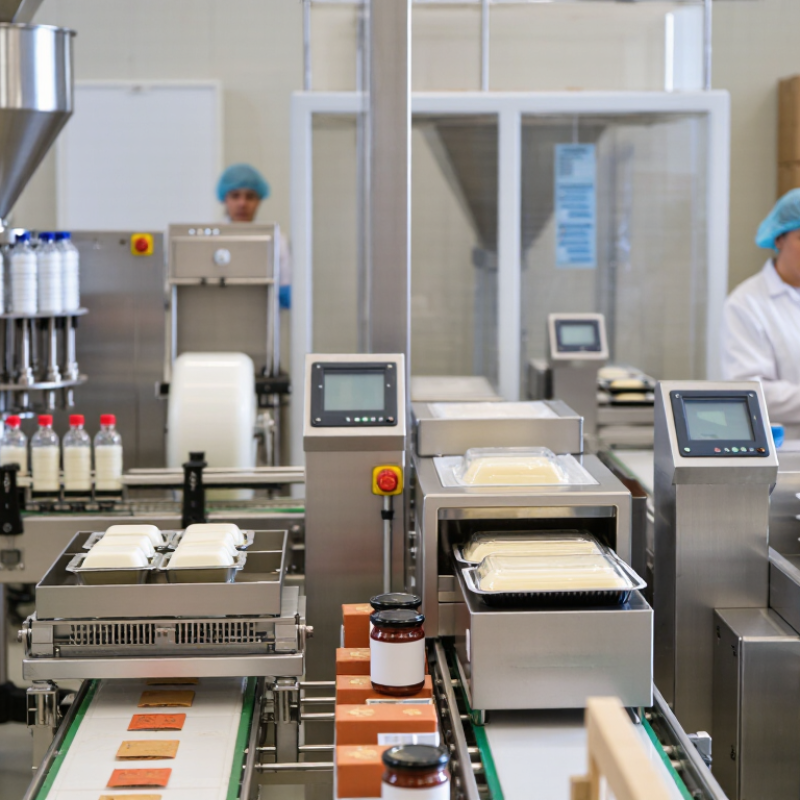
Food packaging machines are best classified by the job they perform, not by one universal label. A production line may combine several classes. Filling and dosing machines measure liquids, powders, pastes, or pieces into containers. Form-fill-seal equipment makes a pouch or bag, fills it, then seals it in one continuous cycle. Tray sealers, vacuum machines, and modified-atmosphere systems seal prepared foods while controlling the air around them. Wrapping and cartoning machines add films, sleeves, or cartons; case packers group finished packs for shipping.

That distinction matters.

Other classifications describe product state, package format, and automation level. A line may handle liquids or solids, use flexible or rigid packaging, and operate manually, semi-automatically, or automatically. These categories overlap: one machine can be both a filler and an automatic pouch system. Grand View Research valued the global packaging machinery market at US$45.8 billion in 2023. Its Packaging Machinery Market Size report projected 5.8% annual growth from 2024 to 2030. That is market context, not proof that every machine class is growing equally.

At plant level, classification should also consider product viscosity, changeover frequency, and cleaning needs. A speed rating can mislead. Actual performance depends on product flow, seal quality, and operator skill. I would question any classification that ignores process limits.

Filling and Dosing Machines for Food Products

Filling and dosing machines control how much product enters each package. The right system depends on texture, portion size, and production speed. Thin juice may suit a flow meter, while thick yogurt often needs piston filling. Powders and small dry ingredients commonly use auger or weight-based dosing. Each method behaves differently.

Small details matter. A nozzle that drips after filling can leave sticky residue on cups and belts. For products with fruit pieces, the opening must be wide enough to reduce clogging without damaging the pieces. Operators should check fill weights at regular intervals, especially after changing product temperature or speed. Even a small variation can affect package consistency. That check is easy to overlook.

Cleaning and changeovers deserve equal attention. Removable contact parts can make inspection easier, but the design still needs to suit the plant’s cleaning process. Ask how quickly recipes can be adjusted and whether settings remain stable across a full shift. I would not assume that a machine’s stated accuracy will hold for every product; viscosity, air bubbles, and uneven particles can change results. A short production trial with the actual food is more useful than relying on specifications alone. Keep records of test weights and adjustments. They reveal patterns, though they may not explain every cause.

What Are the Top Types of Food Packaging Machines?

Typical dosing ranges for common liquid filling machines

Gravity, piston, and peristaltic pump fillers suit different liquid products and dosing needs. The ranges shown are representative examples, not universal machine limits; actual capabilities vary with product properties and equipment configuration.

Form-Fill-Seal and Pouch Packaging Machines

Form-fill-seal (FFS) machines create packages from a roll of film, fill them, and seal them in one process. They are common for products such as snacks, grains, and powdered foods. A vertical FFS machine forms a tube around a filling pipe, then seals the package’s bottom and top. Horizontal models handle products that need gentler placement, such as biscuits. This integrated process can reduce manual handling and keep production moving steadily. A practical choice.

Pouch packaging machines fill and seal pre-made bags, including stand-up and flat pouches. Operators place each pouch into a holder, and the machine opens, fills, and closes it. Some systems add features such as zipper closing or gas flushing, depending on the product and package design. Pouches can offer flexible sizes and shelf appeal, but they may need more careful alignment. Not always simple.

The right machine depends on product texture, target speed, package material, and cleaning needs. Fine powders can create dust near sealing areas, while oily foods may contaminate the seal. Those details matter. Ask for a production trial using the actual product and packaging film. Check seal consistency, changeover time, and how easily staff can clean contact surfaces. A pouch may look attractive on a sample table, yet run poorly at full speed; that gap deserves attention before purchase.

Wrapping, Sealing, and Cartoning Machines

Food packaging lines often combine wrapping, sealing, and cartoning machines, with each unit protecting a different part of the product. Wrapping machines fold film around items such as biscuits, fresh produce, or frozen portions. Horizontal flow wrappers suit products arranged in a row, while other designs handle individual or grouped items. Film tension and product spacing affect how neat and consistent each pack looks.

Small details matter.

Sealing machines close flexible pouches, trays, or lidded containers. Heat sealers use controlled temperature, pressure, and contact time to bond compatible materials. If any setting is wrong, a seal may look complete but still leak. Operators can check sample packs during changeovers and after adjustments; visual checks help, but they do not reveal every weak seal. Product crumbs caught along the seal area can cause trouble, too.

Cartoning machines erect flat blanks, place products inside, and close the cartons with tuck flaps or adhesive. They are useful for bottles, sachets, and multipacks that need a rigid outer package for handling. Carton size, product orientation, and feeding speed all influence smooth operation. A line that runs quickly with one carton may misfeed another, so setup trials are worth the time. Cartons also take up more storage space than flat blanks, a practical trade-off that is easy to overlook.

What Are the Top Types of Food Packaging Machines? - Wrapping, Sealing, and Cartoning Machines

Machine Type How It Works Common Package Formats Typical Food Applications Key Consideration
Flow Wrapper Forms a film around a product and seals it, commonly creating a longitudinal fin seal and sealed ends. Individual pillow packs and flow-wrapped multipacks Bakery items, snack bars, confectionery, and some fresh produce Works best when products can be fed consistently and arranged in a single lane.
Shrink-Wrapping Machine Wraps products or grouped packs in shrink film, then applies heat so the film tightens around them. Film-wrapped trays, bundles, and multipacks Bottled drinks, canned goods, and grouped packaged foods Film type and heat settings must suit the product and package configuration.
Tray Sealing Machine Places a lidding film over a filled tray and seals it to the tray rim; some systems can modify the tray atmosphere. Sealed trays with flat or formed film lids Prepared meals, meat, seafood, and fresh-cut produce Tray material, rim condition, and seal settings affect seal integrity.
Vacuum Sealer Removes air from a package before sealing; chamber models evacuate the chamber, while nozzle models draw air from the bag. Vacuum bags and pouches Cheese, meat, seafood, and other foods packed in suitable barrier bags Vacuum packaging does not replace appropriate refrigeration or food-safety controls.
Vertical Form-Fill-Seal (VFFS) Machine Forms a bag from a roll of film, doses product into it, and seals the package, typically using vertical and transverse seals. Pillow bags, gusseted bags, and selected stand-up pouch formats Rice, grains, snacks, powders, frozen vegetables, and other free-flowing foods The filling system should match the product, such as a scale for solids or an auger for powders.
Cartoning Machine Opens and forms cartons, loads products, and closes the carton using tuck flaps, adhesive, or another specified closure. Folding cartons and sleeve-style cartons Cereal, confectionery, tea, frozen foods, and packaged snacks Carton dimensions and loading method must match the product and upstream packaging line.

Note: Machine capabilities and suitable package materials vary by model, product, and line configuration. Actual performance should be confirmed with product and packaging trials.

Labeling, Coding, and Inspection Machines

Labeling machines place product names, ingredient panels, barcodes, and other information on packages. On a fast line, even a small shift can cover a seam or wrinkle near a corner. Operators can check label position and adhesion during routine changeovers. Small marks matter.

Coding machines print batch identifiers and date information directly onto packaging. The method may use inkjet, thermal transfer, or laser marking, depending on the package surface and production setup. A code that looks sharp on a sample can blur on a damp or flexible film. That detail is easy to overlook. Teams should test codes under actual line conditions and confirm they remain readable after handling.

Inspection machines use cameras or sensors to check labels, printed codes, and visible package features. They can flag missing labels, unreadable characters, or unexpected placement, then signal a reject mechanism. Settings need careful adjustment: an overly sensitive system may reject acceptable packs, while a weak one can miss defects. Inspection supports human checks; it does not replace thoughtful setup or regular review.