7 Tips for Choosing a Coffee Packaging Machine
Coffee demand is steady, but packaging expectations keep changing. The National Coffee Association’s 2024 National Coffee Data Trends report found that 67% of U.S. adults had coffee the previous day. That figure signals a large, active market—not a guarantee that every roaster needs a faster line. Small errors matter. A poorly matched coffee packaging machine can waste beans, film, floor space, and operator time.
The right choice depends on the product and the workday around it. Whole beans and ground coffee behave differently in a hopper; a fine grind can create dust, while oily beans may cling to contact surfaces. Bag sizes, valve placement, seal quality, fill accuracy, and cleaning access all deserve a close look. So does the intended output: a small roastery filling short runs has different needs from a plant packing thousands of bags per shift. Published market figures can offer context, but they rarely tell you whether a particular machine will suit your products. Ask suppliers for trials using your coffee, packaging material, and target weights. Check changeover time, reject handling, spare-parts availability, and support response times. These details are easy to overlook during a polished demonstration. They are harder to ignore on a busy production floor. The following seven tips will help buyers compare equipment with practical evidence, not headline speed alone. A little caution helps.
Understanding Coffee Packaging Machine Types and Processes
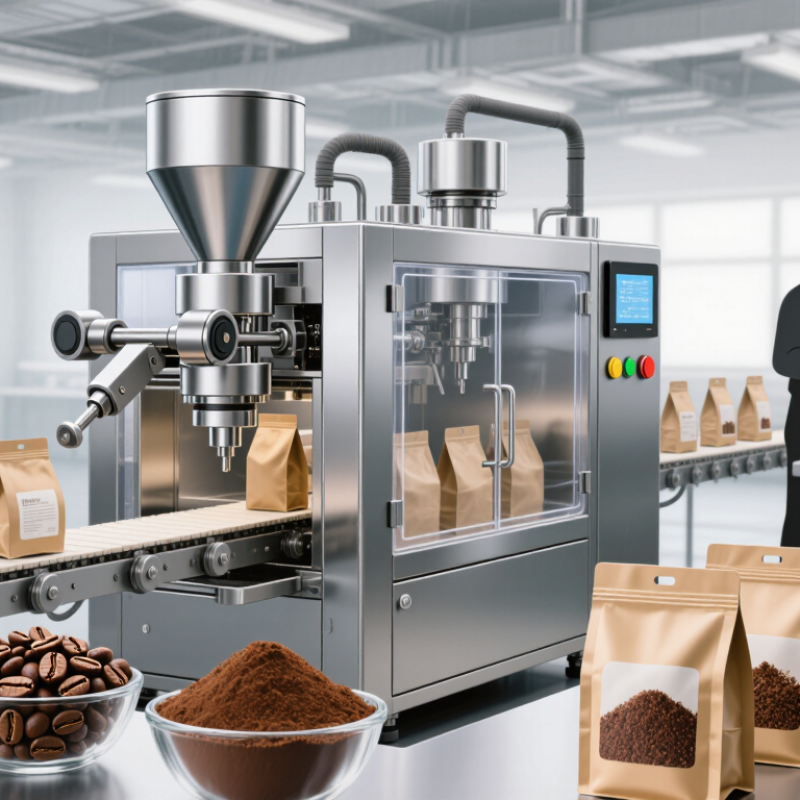
Choosing a coffee packaging machine starts with the pack format and the coffee itself. Vertical form-fill-seal machines create pouches from roll stock and suit steady, higher-volume runs. Premade-pouch machines handle bags with zippers or shaped bottoms, but loading each pouch adds a separate step. Auger fillers meter ground coffee by volume; weigh-fill systems suit whole beans and can offer tighter weight control. Test both with your own product. Fine grounds can cling to filling parts and soil the sealing area.
The process matters as much as the machine type. Coffee is commonly weighed, filled, sealed, and checked; whole-bean packs may also need a one-way degassing valve. Some lines flush packs with nitrogen to limit oxygen exposure, but the benefit depends on the product, film, and process settings. The International Coffee Organization’s Coffee Report and Outlook (December 2023) estimated 2023/24 world consumption at 177 million 60-kilogram bags, a 2.2% increase. That scale signals why reliable throughput matters, not which machine is best for a particular roaster. Small details matter. Ask suppliers to run your beans or grounds at target speed, then inspect seals, fill-weight variation, dust, and valve placement. A clean factory demonstration can be misleading; real coffee is messier, and that is worth remembering.
| Tip | Packaging Need | Machine Type to Consider | Typical Process | Key Selection Check |
|---|---|---|---|---|
| 1. Match the machine to the coffee format. | Ground coffee or whole beans in flexible bags | Vertical form-fill-seal (VFFS) system, or a premade-pouch packaging line | A VFFS system forms a bag from rollstock film, fills it, and seals it. A premade-pouch line opens, fills, and seals bags made in advance. | Confirm that the machine supports the desired bag style, dimensions, film material, and closure, such as a zipper or one-way valve. |
| 2. Choose a filling method suited to the product. | Ground coffee, which can vary in density and flow behavior | Auger filler integrated with a compatible bagging machine | A rotating screw meters coffee into each package. The packaging machine then forms or handles the bag and seals it. | Test the actual grind and target fill weight. Fine or dusty coffee may need dust control and careful product handling. |
| 3. Account for whole-bean handling. | Whole beans in retail bags | Multihead combination weigher paired with a VFFS or premade-pouch machine | Multiple weigh buckets combine measured portions to reach a target weight before product is released into the bag. | Check that the weighing system handles the bean size and target weights accurately, and that drops do not damage the beans. |
| 4. Decide whether vacuum packaging is required. | Ground coffee in compact, tightly packed bricks | Vacuum brick packaging machine | The filled package is evacuated and sealed, then shaped into a compact brick format. Some systems use a gas-flush step before final sealing. | Consider package shape, required vacuum level, product degassing, and whether the film is suitable for the packaging process. |
| 5. Plan for coffee degassing and freshness. | Freshly roasted beans that release carbon dioxide after roasting | Bagging machine configured for one-way degassing valves; optional gas-flush capability | Coffee is filled into a compatible bag and sealed. A one-way valve allows gas to escape while helping limit air entering the package. | Verify valve placement, seal quality, and compatibility with the chosen bag. Gas flushing may reduce oxygen in the package but does not replace suitable barrier packaging. |
| 6. Select a format for rigid containers. | Coffee in cans, jars, or other rigid containers | Container filling and closing line with a suitable filler and seamer or capper | The container is filled, then closed using the method designed for it, such as can seaming or jar capping. Gas flushing can be added on compatible lines. | Check container dimensions, closure type, changeover needs, and whether the line can manage the desired fill level and sealing process. |
| 7. Evaluate the complete line, not just the filler. | Production requiring repeatable output, multiple package sizes, or future expansion | Integrated line combining product feeding, weighing or dosing, packaging, coding, and inspection | Product moves from the hopper through dosing and packaging, then to date coding and optional checkweighing or metal detection. | Confirm actual tested throughput for your product and package, changeover time, cleaning access, operator training, floor space, and service requirements. |
Related Posts
-
How to Choose the Best Coffee Packaging Machine?
-
Exploring the Features and Applications of Various Coffee Packaging Machines How to Choose the Best One
-

Top Food Packaging Machines in 2025 Trends and Innovations You Should Know
-
7 Essential Features of the Best Pouch Filling Machine for Successful Packaging
-
Top 10 Wrapping Machine Manufacturers Worldwide
-
7 Best Food Packing Machines for Global Buyers